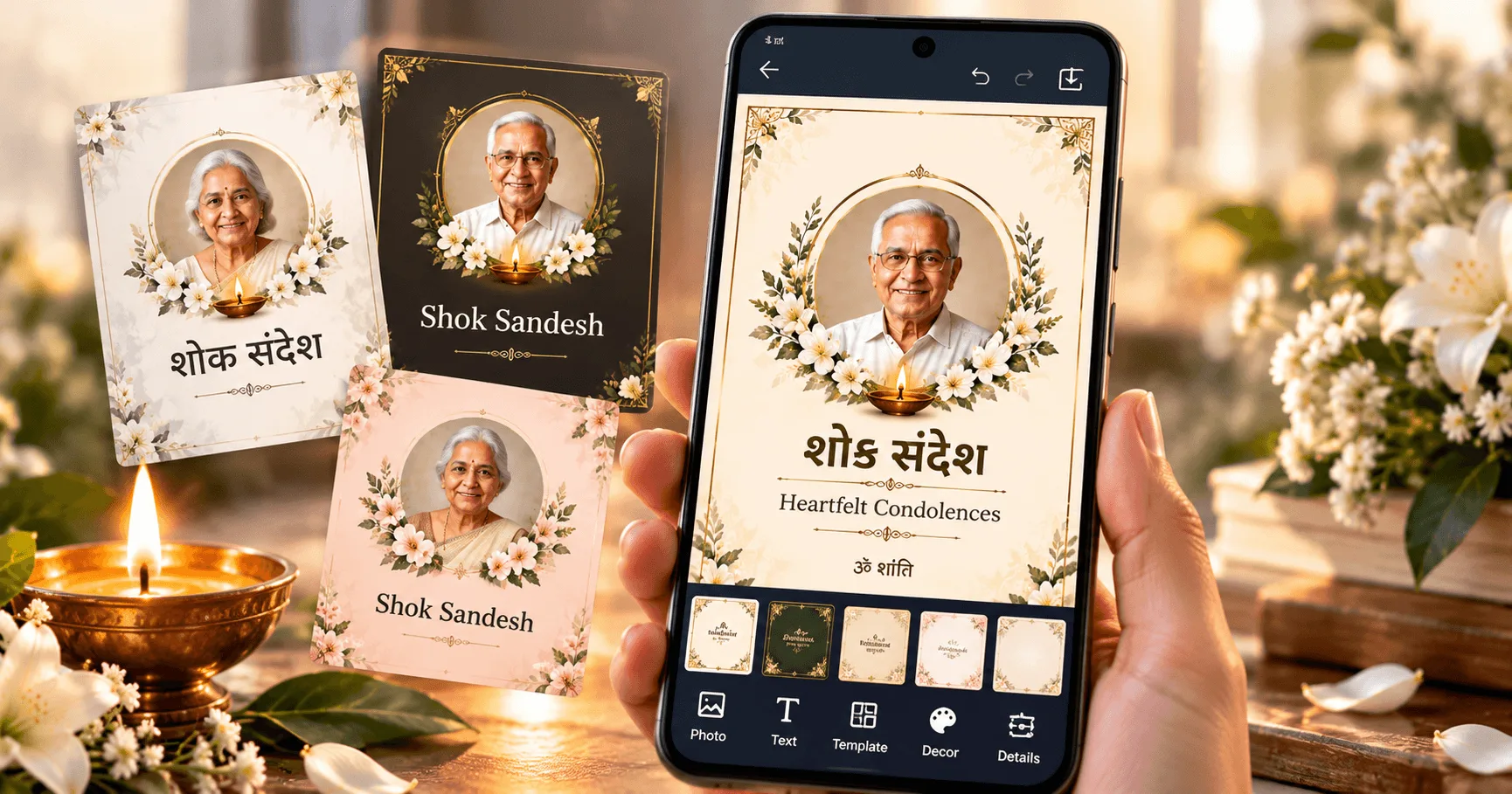
When someone passes away, sharing a respectful Shok Sandesh can be a meaningful way to express grief, remembrance, and condolences. A Shok Sandesh card can combine a photograph, the person's name, a heartfelt message, and important ceremony details in one simple design.
Today, you do not need a computer or professional graphic-design software to create a condolence card. With an Android mobile phone and a suitable card-making application, you can prepare a Shok Sandesh card in a few simple steps and share it digitally with family members, relatives, and friends.
In this guide, you will learn how to make a Shok Sandesh card on your mobile, what information to include, how to select a photograph and message, and how to review the card before sharing it on WhatsApp or other platforms.
Quick Summary
Application
Shradhanjali Card Maker
Category
Shok Sandesh
Reading Time
8–10 Minutes
Difficulty
Beginner
What Is a Shok Sandesh Card?
A Shok Sandesh card is a respectful message card used to communicate sorrow, remembrance, and condolences following the passing of a person. Depending on the family and cultural context, the card may include a photograph, name, dates, condolence message, family information, and details about a prayer meeting or other ceremony.
The phrase Shok Sandesh is commonly associated with a message of grief or condolence. A digital Shok Sandesh card makes it easier to present this information in an organized format and share it with people who may need to know about the loss or related gathering.
In Gujarati, you may see terms such as શોક સંદેશ or શોક સંદેશ કાર્ડ. In Hindi, the equivalent search intent is often expressed as शोक संदेश or शोक संदेश कार्ड. The exact wording can vary according to regional preference and family tradition.
What Information Should Be Included on a Shok Sandesh Card?
A good Shok Sandesh card should present essential information clearly without making the design too crowded. The exact details depend on how the card will be used, but the following elements are commonly useful.
Photograph
Use a clear and respectful photograph that represents the person appropriately.
Name
Add the person's full name carefully and verify the spelling before sharing the final card.
Dates
If appropriate, include relevant birth and passing dates or other important remembrance information.
Condolence Message
Choose a short and respectful Shok Sandesh or Shradhanjali message that fits the occasion.
Ceremony Details
Add the date, time, venue, prayer meeting or other ceremony information when required.
Family Information
Include appropriate family details when the card is intended to inform relatives and friends.
How to Make a Shok Sandesh Card on Your Mobile
Creating a Shok Sandesh card on a mobile phone can be straightforward when you prepare the required information first. An Android card maker can help you arrange the photograph, text, message, and ceremony details into a ready-to-share design.
Step 1: Prepare the Required Information
Before opening the card maker, collect the person's photograph, correct name, relevant dates, family information, condolence message, and ceremony details if they need to appear on the card. Having these details ready can make the creation process faster and reduce mistakes.
Step 2: Choose a Suitable Card Design
Select a simple and respectful Shok Sandesh or memorial design. Avoid overly bright colors, distracting decorations, or layouts that make the important information difficult to read.
Step 3: Add the Photograph
Select a clear photograph from your mobile gallery. A front-facing or otherwise appropriate photograph with good lighting usually works better than a heavily cropped or low-quality image.
Step 4: Enter the Person's Details
Add the person's name and any relevant dates or family details. Carefully check spelling, numbers, and other information before continuing.
Step 5: Add a Shok Sandesh Message
Choose a message that expresses sympathy and remembrance in a respectful way. You can use a short Shok Sandesh, Shradhanjali message, or another appropriate condolence message depending on the purpose of the card.
Step 6: Add Ceremony Information
If the card is also being used to communicate a prayer meeting or remembrance gathering, add the date, time, venue, and location information clearly.
Step 7: Review and Save the Card
Before sharing the final card, review every important detail. Check the photograph, name, dates, message, ceremony details, and overall readability. Once everything looks correct, save the finished card to your device.
Why Create a Shok Sandesh Card on Mobile?
Mobile phones are convenient for preparing and sharing digital condolence cards because the required photographs and contact information are often already available on the device. A mobile workflow can also be useful when a card needs to be prepared quickly without access to a desktop computer.
- Create a card directly from an Android mobile device.
- Use a photograph stored in your phone gallery.
- Add a personalized Shok Sandesh or condolence message.
- Include important ceremony information when needed.
- Review the complete design before sharing.
- Share the finished digital card with family and friends.
How to Choose the Right Shok Sandesh Message
The message is one of the most important parts of a Shok Sandesh card. It should communicate sympathy and remembrance without making the card unnecessarily crowded. The best choice depends on the relationship with the person and the purpose of the card.
Short and Respectful Messages
Short messages are useful when the card already contains a photograph, name, dates, and ceremony information. A simple expression of respect and remembrance can be enough.
Heartfelt Messages
For a family memorial card, a more personal message can express love, gratitude, memories, and the lasting impact of the person.
Spiritual Messages
When appropriate for the family and their beliefs, a spiritual message can express a prayer for peace or remembrance. Terms such as Om Shanti may be suitable in the right cultural context.
Regional-Language Messages
A Gujarati, Hindi, or Marathi Shok Sandesh can make the card easier for relatives and friends to understand. Choose the language that is most natural for the intended audience.
How to Choose a Photo for a Shok Sandesh Card
The photograph is often the central visual element of a Shok Sandesh card. Selecting a suitable image can make the final design look more personal while maintaining a respectful appearance.
- Choose a clear photograph: Avoid extremely blurry or heavily pixelated images.
- Use an appropriate expression: Select a photograph that represents the person respectfully.
- Check the crop: Make sure the face is not accidentally cut off when placed into the card frame.
- Consider image quality: A reasonably high-resolution photograph generally produces a better result.
- Preview the final design: Check how the photograph looks with the selected background and frame.
How to Write a Shok Sandesh Message
You do not need complicated words to write a meaningful condolence message. A sincere and simple message can communicate sympathy effectively.
Express Sympathy
Begin with a respectful expression of sorrow or condolences.
Remember the Person
Mention the person's kindness, memories, or positive influence when appropriate.
Offer a Prayer or Tribute
Close with a respectful remembrance or prayer for peace if suitable.
For example, a simple message could be: “With deepest sympathy and heartfelt respect, we remember a precious life and offer our prayers for eternal peace.”
Gujarati Shok Sandesh Card Ideas
Gujarati families may prefer a ગુજરાતી શોક સંદેશ કાર્ડ when sharing condolences with relatives and friends. Using Gujarati text can make the card feel more natural and familiar to the intended audience.
Gujarati Message Example
દિવંગત આત્માને ભાવભીની શ્રદ્ધાંજલિ. પરમાત્મા દિવંગત આત્માને શાંતિ અર્પે અને પરિવારજનોને આ દુઃખ સહન કરવાની શક્તિ આપે.
When creating a Gujarati Shok Sandesh card, check the Gujarati spelling carefully and make sure the font is clear and readable. Avoid using decorative fonts that make Gujarati characters difficult to understand.
Hindi Shok Sandesh Card Ideas
A हिंदी शोक संदेश कार्ड can be useful when the intended recipients primarily communicate in Hindi. Keep the wording respectful and choose a font that displays Hindi characters clearly.
Hindi Message Example
दिवंगत आत्मा को भावपूर्ण श्रद्धांजलि। ईश्वर दिवंगत आत्मा को शांति प्रदान करें और परिवार को इस कठिन समय में शक्ति दें।
If the card includes ceremony details, keep the date, time, and venue visually separate from the main condolence message so that recipients can find practical information quickly.
How to Add Ceremony Details to a Shok Sandesh Card
Some Shok Sandesh cards are created only as remembrance tributes, while others also provide information about a prayer meeting or condolence gathering. If ceremony information is required, organize it clearly.
Information You May Include
- Prayer meeting or ceremony name
- Date
- Time
- Venue
- Location or address
- Family information
- Additional instructions when necessary
Always verify these details before sharing the card. An incorrect date, time, or venue can cause confusion for people attending the gathering.
Tips for Creating a Simple and Respectful Shok Sandesh Card
A good condolence card does not need excessive decoration. A clean layout often makes the photograph, message, and important information more meaningful and easier to read.
- Use a calm and respectful background.
- Keep the photograph clear and appropriately positioned.
- Choose readable typography.
- Use enough spacing between different sections of information.
- Avoid filling every available area with text or decorations.
- Keep the main condolence message concise.
- Review all names, dates, and ceremony details before saving.
How to Share a Shok Sandesh Card on WhatsApp
Once your Shok Sandesh card is complete, you can share it with relatives, friends and other people who need the information. WhatsApp is one of the most convenient options because a finished card can be shared directly with individual contacts or family groups.
Before sending the card, check the person's name, photo, condolence message, ceremony details, date, time and location. A final review is especially important because the card may be forwarded to many people.
- Save the completed Shok Sandesh card on your phone.
- Open WhatsApp and select the required contact or family group.
- Attach the saved card image.
- Preview the image and confirm that all details are readable.
- Send the card respectfully to the intended recipients.
Shok Sandesh Card vs Shradhanjali Card
Shok Sandesh and Shradhanjali cards are both used during times of loss, but their purpose and presentation can differ. A Shok Sandesh card generally communicates grief, condolence and information related to mourning or ceremonies. A Shradhanjali card often focuses more on paying tribute to and remembering the life of the deceased person.
| Shok Sandesh Card | Shradhanjali Card |
|---|---|
| Focuses on expressing grief and condolences | Focuses on remembrance and tribute |
| Can include mourning and ceremony information | Can highlight memories and respectful messages |
| Often shared with family and contacts during mourning | Often used as a memorial or tribute card |
The appropriate format depends on the family's needs, cultural preferences and the information they want to communicate.
Common Mistakes to Avoid When Making a Shok Sandesh Card
A respectful card should be simple, accurate and easy to read. Avoiding common design and information mistakes can make the final card more appropriate for sharing.
- Using an unclear photo: Choose a clear and suitable photo.
- Adding too much text: Keep the message meaningful and easy to read.
- Using distracting colors: Prefer calm and respectful colors.
- Forgetting important details: Check ceremony date, time and venue.
- Ignoring spelling: Carefully review names and family details.
- Using difficult fonts: Choose fonts that remain readable on mobile screens.
- Sharing without reviewing: Always preview the completed card before sending it.
How to Make a Shok Sandesh Card More Personal
A personal touch can make a Shok Sandesh card more meaningful without making the design complicated. Start with a respectful photograph and use a sincere message that reflects the person's memory and the family's feelings.
You can also include the family name, important ceremony information or a short remembrance when appropriate. Keep the wording natural and avoid adding unnecessary decorative elements.
Simple Personalization Tips
- Use a clear and meaningful photograph.
- Choose a short and sincere condolence message.
- Add accurate family and ceremony details.
- Use a clean background and readable typography.
- Keep the overall design calm and respectful.
Final Checklist Before Sharing Your Shok Sandesh Card
Take a final moment to review the complete card before sharing it. Checking the details can help prevent mistakes and ensure that the card communicates the intended message respectfully.
Information Check
- Person's name is correct
- Photo is clear and appropriate
- Dates and family details are correct
- Condolence message has been reviewed
Sharing Check
- Ceremony date and time are correct
- Venue and location are accurate
- Text is readable on mobile
- Final image has been previewed
Frequently Asked Questions About Shok Sandesh Cards
Conclusion
Creating a Shok Sandesh card on your mobile can make it easier to prepare and share an important message during a difficult time. A respectful design, clear photograph, sincere message and accurate ceremony details can help you create a card that communicates the necessary information with dignity.
Before sharing, always review names, dates, messages and location details. Whether you are preparing a Gujarati Shok Sandesh, Hindi Shok Sandesh or a simple condolence card, keeping the design clear and respectful is more important than adding unnecessary decoration.