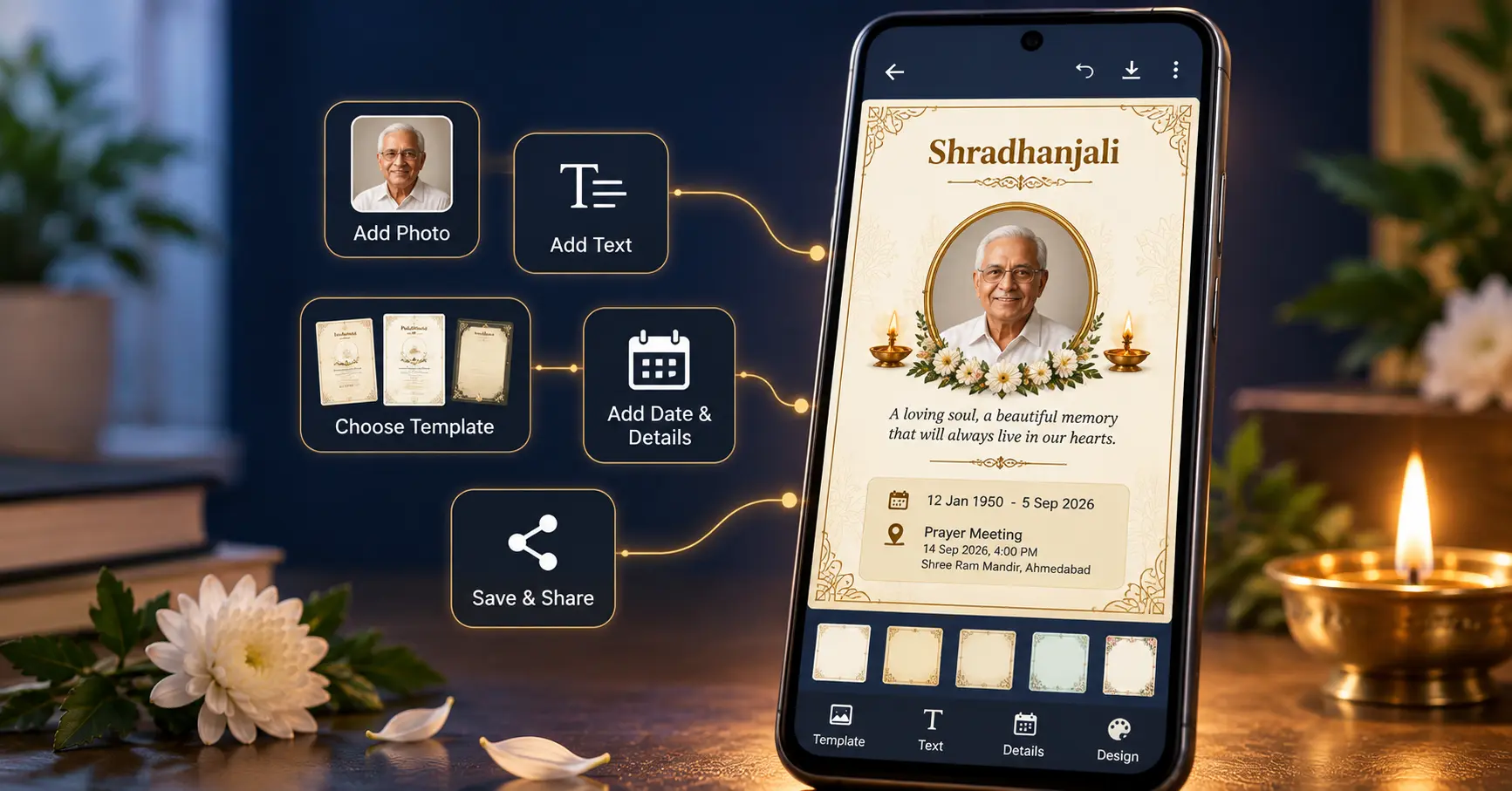
When someone close to us passes away, expressing respect and sharing important information with family, friends, and relatives becomes an important part of the difficult days that follow. A Shradhanjali card provides a simple and respectful way to remember a loved one while communicating details about prayers, ceremonies, or remembrance gatherings.
Today, you do not need a computer or professional graphic design software to create a meaningful tribute card. With an Android smartphone and a suitable Shradhanjali card maker, you can create a personalized card using a photograph, name, dates, heartfelt message, and ceremony information.
This complete guide explains how to create a Shradhanjali card on Android, what information to include, how to choose an appropriate design, and what to check before sharing the finished card.
Application
Shradhanjali Card Maker
Category
Shradhanjali Card
Reading Time
8–10 Minutes
Difficulty
Beginner
Quick Summary
Choose a Design
Select a simple and respectful Shradhanjali card design suitable for the occasion.
Add Information
Add the person's photo, name, dates, message, and relevant ceremony details.
Review the Card
Check spelling, dates, photograph placement, and all important information before saving.
Save & Share
Save the completed card and share it with family, friends, and other intended recipients.
What Is a Shradhanjali Card?
A Shradhanjali card is a tribute or remembrance card created to honor someone who has passed away. It can contain the person's photograph, name, important dates, a respectful message, and information about a prayer meeting or other ceremony.
Depending on the region, family tradition, and purpose, people may use different terms for remembrance and condolence cards. These can include RIP card, condolence card, memorial card, Shok Sandesh card, Besna card, Besanu card, and other regional formats.
In Gujarati, people may search for terms such as શ્રદ્ધાંજલિ કાર્ડ or શ્રદ્ધાંજલિ કાર્ડ મેકર. Hindi searches may include श्रद्धांजलि कार्ड and श्रद्धांजलि कार्ड मेकर. Although the terminology can differ, the purpose is generally to communicate remembrance, respect, sympathy, or ceremony information.
A good Shradhanjali card should therefore focus on three things: respectful presentation, accurate information, and easy readability.
Why Create a Shradhanjali Card on Android?
An Android smartphone is already part of everyday communication for many people. Using a mobile card-making application can make it more convenient to prepare a tribute card without having to use a desktop computer or complicated design software.
Create It From Your Phone
A smartphone lets you prepare the card wherever you are, without requiring a computer or professional design software.
Use a Personal Photograph
You can select a suitable photograph from your phone and use it as an important part of the tribute card.
Personalize the Details
Add the person's name, dates, message, family information, and ceremony details according to the purpose of the card.
Easy Digital Sharing
Once the card is ready, you can share the final design digitally with relatives, friends, and community members.
What Information Should a Shradhanjali Card Include?
Before starting the design, it is useful to collect all the required information. Preparing these details first can make the card creation process faster and can also help reduce mistakes.
- Name of the departed person: Enter the correct name and spelling.
- Photograph: Choose a clear and respectful photograph.
- Important dates: Add relevant dates when required by the selected card format.
- Shradhanjali message: Include a short and heartfelt tribute or condolence message.
- Ceremony details: Include prayer meeting, Besna, Shok Sabha, Antim Yatra, or other applicable information.
- Date and time: Clearly mention when a ceremony or gathering is scheduled.
- Venue: Add the location where family members or guests are expected to gather.
- Family information: Add appropriate family or contact information when necessary.
Not every card needs all of these elements. The information should match the purpose of the card. A simple remembrance card may need only a photograph, name, and message, while a ceremony invitation may require detailed date, time, and venue information.
How to Choose the Right Shradhanjali Card Design
The design of a Shradhanjali card should communicate respect rather than overwhelm the reader. A clean layout with readable text and a well-positioned photograph can make the important information easier to understand.
Choose a Simple and Respectful Layout
Avoid selecting a design simply because it contains many decorative elements. The photograph, person's name, tribute message, and important information should remain the main focus.
Check the Photograph Area
The photograph is often one of the most important elements of a Shradhanjali card. Choose a layout that provides enough space for the photograph and does not crop important facial details.
Make Text Easy to Read
The card may be viewed on a small smartphone screen, so text should have sufficient size and contrast. Avoid decorative fonts that make names, dates, or ceremony information difficult to read.
Use the Appropriate Language
Choose the language that is most comfortable for the intended recipients. Depending on the audience, you may need a Gujarati Shradhanjali card, Hindi Shradhanjali card, Marathi card, English memorial card, or another regional-language format.
Prepare Your Details Before Designing the Card
Taking a few minutes to prepare the required information can make the card creation process smoother. It is especially useful when the card needs to be shared quickly with several people.
Keep These Details Ready
- Clear photograph of the departed person
- Correct full name
- Relevant date information
- Short Shradhanjali or condolence message
- Prayer meeting or ceremony details
- Venue and location information
- Family or contact information, if required
Once these details are ready, you can concentrate on choosing the design and arranging the information rather than searching for missing details while creating the card.
Step-by-Step: How to Create a Shradhanjali Card on Android
Once you have the photograph and required information ready, creating a Shradhanjali card on an Android phone can be completed in a few simple steps. A dedicated Shradhanjali card maker can make the process easier by bringing the design and personalization workflow together on your mobile device.
Step 1: Open a Shradhanjali Card Maker
Start by opening a suitable Shradhanjali card-making application on your Android phone. Choose an application that provides the type of memorial or tribute card you need.
For this guide, you can use Shradhanjali Card Maker to create a personalized remembrance card directly from your Android device.
Step 2: Select the Appropriate Card Format
Depending on the purpose, you may need a Shradhanjali card, RIP card, condolence card, memorial card, Besna card, Shok Sandesh card, or a ceremony-related card.
Think about what you want the card to communicate before selecting the design. A remembrance card and a ceremony information card may require different layouts and amounts of information.
Step 3: Choose a Suitable Template
Browse the available designs and select one that provides enough space for the photograph, name, message, and other important information.
A good template should have a balanced layout. Avoid designs where decorative elements make the main information difficult to read.
Step 4: Add the Person's Photograph
Select a suitable photograph from your Android phone. Ideally, choose an image that is clear, properly lit, and shows the person's face clearly.
After adding the photograph, check how it appears inside the selected frame. Make sure the face is not unnecessarily cropped and that the image looks natural within the design.
Step 5: Enter the Person's Name
Enter the person's name carefully and check the spelling before moving to the next section. The name is one of the most important pieces of information on the card.
If the card uses a traditional title or family reference, make sure the wording is appropriate and consistent with the family's preference.
Step 6: Add Dates and Other Personal Information
Depending on the card's purpose, you may want to include relevant dates or personal information. Review each date carefully because incorrect information can cause confusion when the card is shared with relatives and friends.
Only include information that is relevant to the purpose of the card. A simple tribute card does not need to be overloaded with unnecessary details.
Step 7: Add a Heartfelt Shradhanjali Message
A meaningful message can make the card feel more personal. Keep the wording sincere and appropriate for the occasion.
A short message is often easier to read on a mobile card. You can express remembrance, respect, sympathy, or prayers without filling the entire design with text.
Simple Message Structure
- Begin with a respectful remembrance.
- Express heartfelt sympathy or tribute.
- Mention the person's memory when appropriate.
- End with a peaceful remembrance or prayer sentiment.
Step 8: Add Ceremony Details
If the card is being created to inform people about a ceremony, enter the relevant details clearly. Depending on local customs and the purpose of the card, this may include information about a prayer meeting, Besna, Shok Sabha, Antim Yatra, or another remembrance ceremony.
Important information can include:
- Ceremony name
- Date
- Day
- Time
- Venue
- City, village, or locality
- Family information
- Location details, when required
Step 9: Check the Card Layout
Before saving the design, look at the complete card rather than checking individual fields separately. Make sure the photograph, name, message, dates, and ceremony information are properly aligned.
Pay special attention to text near the edges of the design. Important information should not be too close to the border or hidden behind decorative elements.
Step 10: Save the Finished Card
After confirming that everything is correct, save the finished card using the available save or export option. Keep the final version on your phone so it is ready for sharing when needed.
If you are preparing a card for an upcoming ceremony, it is a good idea to review the final file one more time immediately before sharing it.
How to Write a Respectful Shradhanjali Message
The message on a Shradhanjali card should be sincere and respectful. It does not need to be long to express meaningful emotions.
When writing a message, consider the relationship between the family and the person being remembered. A simple and genuine message is generally better than a long paragraph filled with unnecessary words.
Keep the Message Short
A short message leaves enough space for the person's photograph and important ceremony information. It also makes the card easier to read on mobile devices.
Use Respectful Language
Choose words that communicate remembrance, respect, sympathy, and peace. Avoid casual language or expressions that may not be appropriate for the occasion.
Match the Language to Your Audience
If most recipients speak Gujarati, Hindi, Marathi, or another regional language, using that language can make the message more natural and meaningful for them.
How to Create a Gujarati Shradhanjali Card
Gujarati is widely used for family and community communication in Gujarat, so a Gujarati Shradhanjali card can be useful when the intended recipients are Gujarati-speaking.
When creating a Gujarati Shradhanjali card, use familiar Gujarati wording and make sure the Gujarati text is displayed correctly. The card should remain easy to read on both small and large smartphone screens.
Depending on the occasion, terms such as શ્રદ્ધાંજલિ, શોકસભા, બેસણું and other traditional expressions may be appropriate. Always choose wording according to the actual ceremony and the family's preference.
How to Create a Hindi Shradhanjali Card
A Hindi Shradhanjali card can be useful when the recipients are more comfortable reading Hindi. The same basic process applies: select a suitable design, add the photograph, enter the person's information, write a respectful message, and review the complete card.
Common Hindi search terms related to this type of content include श्रद्धांजलि कार्ड, श्रद्धांजलि कार्ड मेकर, शोक संदेश, RIP कार्ड and पुण्यतिथि कार्ड.
When using Hindi text, check the spelling carefully before sharing the final card, especially when entering names and ceremony details.
How to Create a Marathi Shradhanjali Card
For Marathi-speaking families, a Marathi remembrance or condolence card can make the information more accessible to relatives and friends. Choose wording that is familiar to the intended audience and keep the layout simple.
As with Gujarati and Hindi cards, carefully review names, dates, ceremony details, and the final photograph before sharing the card.
How to Create a Shradhanjali Card for WhatsApp
WhatsApp is commonly used for communicating with family members, friends, and community groups. A digital Shradhanjali card can make it easier to share the same important information with multiple recipients.
Keep the Card Mobile-Friendly
Most recipients may view the card on a smartphone. Use readable text and avoid making important information too small.
Review Before Forwarding
Before sharing the card in a WhatsApp group or forwarding it to multiple contacts, verify all information one final time. Pay particular attention to dates, time, venue, and location details.
Share the Final Version
If changes are made after the card has already been shared, make sure recipients receive the corrected version. Using one final approved design can help avoid confusion.
Common Mistakes to Avoid When Creating a Shradhanjali Card
Using a Blurry Photograph
A low-quality image can make the finished card look unclear. Use the clearest suitable photograph available.
Adding Too Much Text
Excessive text can make the card crowded and difficult to read on a smartphone.
Entering Incorrect Dates
Always verify dates and ceremony times before sharing the card with family and community members.
Poor Text Contrast
Text should remain clearly visible against the selected background and decorative elements.
Tips for Creating a Professional and Respectful Shradhanjali Card
A Shradhanjali card should be simple, respectful, and easy to understand. The purpose of the card is to remember the departed person and communicate important information, so the design should support the message rather than distract from it.
Use a Clear Photograph
Choose a clear and respectful photograph. Make sure the person's face is visible and is not unnecessarily cropped by the selected design.
Keep the Layout Balanced
Give enough space to the photograph, person's name, message, and ceremony information instead of filling every part of the card.
Use Readable Text
Choose text that can be read comfortably on a smartphone. Important dates, names, and ceremony details should be easy to find.
Avoid Excessive Decoration
Decorative elements should complement the card without covering the photograph or making important information difficult to read.
What Makes a Good Shradhanjali Card?
A good Shradhanjali card does not need to be complicated. The most important qualities are clarity, accuracy, readability, and a respectful presentation.
- Clear photograph: The selected image should be suitable for the card.
- Correct information: Names, dates, times, and locations should be checked carefully.
- Readable typography: Text should remain clear when the card is viewed on a mobile screen.
- Balanced design: The main information should receive enough visual space.
- Appropriate message: The wording should reflect respect and remembrance.
- Easy sharing: The final card should be convenient to save and share with the intended recipients.
Remember that the card represents a sensitive moment for the family. A clean and thoughtful design is usually more appropriate than a complicated or heavily decorated layout.
Shradhanjali Card vs RIP Card vs Condolence Card
People often use several different search terms when looking for memorial or remembrance card designs. Although these terms can overlap, their emphasis can be slightly different.
| Card Type | Common Purpose |
|---|---|
| Shradhanjali Card | To pay tribute and remember someone who has passed away. |
| RIP Card | To share a remembrance or Rest in Peace message. |
| Condolence Card | To express sympathy and support for the bereaved family. |
| Memorial Card | To preserve or share a tribute to the memory of a loved one. |
| Besna / Besanu Card | To communicate information related to a remembrance or family gathering according to local customs. |
The appropriate format depends on the occasion, family tradition, and information that needs to be communicated.
How to Check a Shradhanjali Card Before Sharing
Reviewing the finished card is an important final step. Once a card has been shared with many people, correcting an incorrect date or venue can become difficult.
Final Review Checklist
- Check the person's full name and spelling.
- Make sure the photograph is the intended photograph.
- Verify all dates.
- Check the ceremony day and time.
- Confirm the venue and location.
- Read the Shradhanjali message once again.
- Check that all text is readable.
- Make sure no important information is cropped.
- Preview the complete card before sharing.
If the card contains information about a scheduled ceremony, pay particular attention to the date, time, and venue. These details are often the most important information for recipients.
When Can You Use a Shradhanjali Card?
A Shradhanjali card can be prepared for different remembrance and communication purposes. The exact format and wording can be adjusted according to the occasion.
Tribute and Remembrance
Create a simple tribute card to remember a loved one and share their photograph and a heartfelt message.
Prayer Meeting
Include the date, time, venue, and other information when communicating details about a prayer meeting.
Family Remembrance
Use a personalized design to preserve and share a respectful memory of a family member.
Death Anniversary
A memorial-style card can also be prepared to remember someone on a death anniversary or Punyatithi.
Create a Shradhanjali Card Without Complicated Design Software
Creating a memorial card does not have to involve complicated graphic design tools. An Android smartphone can provide a convenient way to prepare a card when you need to combine a photograph, personal information, a tribute message, and ceremony details in one design.
The key is to start with accurate information, choose a respectful template, use a clear photograph, and keep the final layout easy to read. Before sharing, always review the complete card carefully.
Frequently Asked Questions
Conclusion
Creating a Shradhanjali card on Android can be a simple and convenient way to prepare a respectful tribute for a loved one. With the right photograph, accurate personal information, a heartfelt message, and a clean design, you can create a card that communicates remembrance while keeping important details easy to understand.
Whether you need a Shradhanjali card, RIP card, condolence card, memorial card, Besna card, or Shok Sandesh card, take time to review the final design before sharing it. Correct names, dates, ceremony details, and readable text can make the card more useful and meaningful for everyone who receives it.