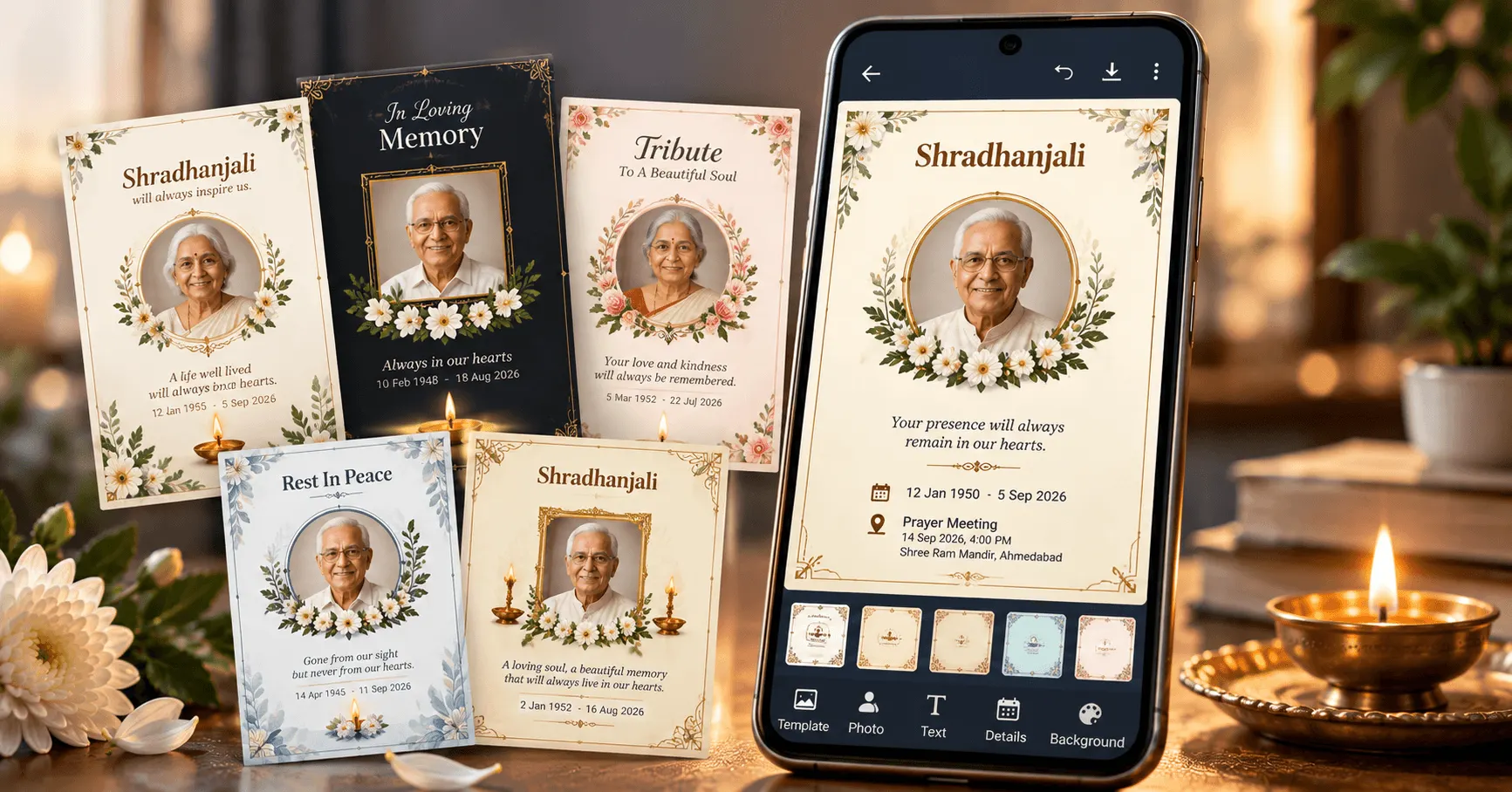
A Shradhanjali card is a meaningful way to remember a loved one and share their memory with family, friends, and the wider community. Choosing the right design is important because the card should feel respectful, clear, and appropriate for the occasion.
The best Shradhanjali card designs usually combine a suitable photograph, a simple background, readable text, and a heartfelt message. Whether you are creating a memorial card, RIP card, condolence card, tribute card, or a card for a prayer meeting, the design should keep the focus on the person being remembered.
In this guide, we will explore different Shradhanjali card design ideas, photo styles, backgrounds, frames, typography, and layout choices that can help you create a dignified memorial card on Android.
Application
Shradhanjali Card Maker
Category
Shradhanjali Card
Reading Time
8–10 Minutes
Difficulty
Beginner
What Makes a Good Shradhanjali Card Design?
A good Shradhanjali card design should communicate remembrance and respect without becoming overly decorative. The photograph, name, message, and important details should have enough space and should remain easy to read.
Respectful Appearance
Choose a calm and dignified design that is appropriate for remembering a loved one. Avoid visual elements that make the card appear like a celebration or advertisement.
Clear Photograph
A clear and meaningful photograph should remain the main visual focus. Select an image with good lighting and a suitable crop.
Readable Information
The person's name, dates, Shradhanjali message, and ceremony information should be easy to read on both smartphones and printed cards.
Balanced Layout
Keep enough space between the photograph, text, and decorative elements. A clean layout usually makes a memorial card more meaningful.
Popular Shradhanjali Card Design Styles
There is no single design that works for every family or occasion. Different people may prefer traditional, simple, modern, or photo-focused layouts. The best choice depends on the type of remembrance card you want to create.
1. Traditional Shradhanjali Design
Traditional designs generally use a simple photograph, subtle decorative elements, a respectful message, and important family or ceremony information. They are suitable when you want the card to have a familiar and formal feel.
2. Simple Memorial Card
A minimal memorial card focuses on the photograph, name, dates, and a short remembrance message. This style works especially well when the card will be shared digitally.
3. Photo-Focused Tribute Card
This design gives more visual space to the person's photograph. A subtle frame and limited text can create a personal tribute while keeping the card uncluttered.
4. RIP Card Design
A RIP or Rest in Peace card can use a restrained layout featuring the person's photograph, name, remembrance message, and a simple memorial background.
How to Choose the Right Photo for a Shradhanjali Card
The photograph is often the most important visual element of a Shradhanjali card. Choosing a suitable photo can make the final design feel more personal and respectful.
- Choose a clear photograph with the face easily visible.
- Prefer a natural and respectful photograph that represents the person well.
- Avoid heavily edited or low-quality images when possible.
- Check the crop before finalizing the card so that the face is not accidentally covered by a frame or decorative element.
- Use a higher-resolution image if the card will also be printed.
If the original photograph has unnecessary background elements, a suitable crop or simple photo adjustment can help the person remain the visual focus of the card.
Best Background Ideas for Memorial and Tribute Cards
The background should support the photograph and message rather than compete with them. Soft, neutral, and understated backgrounds are usually easier to combine with memorial content.
Soft Neutral Background
A subtle neutral background keeps the card clean and makes text and photographs easier to see.
Elegant Dark Background
A restrained dark background can create a formal memorial appearance when combined with readable text and a clear photograph.
Minimal Light Background
A simple light background works well for a clean digital card and allows the photograph and message to stand out.
Best Photo Frame Styles for Shradhanjali Cards
A suitable photo frame can give a Shradhanjali card a polished and respectful appearance. The frame should complement the photograph without taking attention away from the person being remembered.
Simple Border Frame
A clean border around the photograph is a timeless choice. It keeps the design simple and allows the person's photo to remain the main focus.
Classic Memorial Frame
A traditional frame can add a formal appearance to a memorial or Shradhanjali card while keeping the overall composition balanced.
Soft Decorative Frame
Subtle decorative details can be used when you want a slightly more personalized tribute without making the design visually crowded.
Minimal Circular or Rounded Frame
Rounded photo frames can create a softer visual appearance. They work particularly well with simple layouts and short remembrance messages.
How to Choose the Right Shradhanjali Card Layout
The layout determines how the photograph, name, dates, message, and other information are arranged. A good layout makes the card easier to understand at a glance.
Photo at the Center
A centered photograph works well when the person's image is the primary focus. The name and remembrance message can be placed above or below the photograph.
Photo at the Top
A top-photo layout gives the card a straightforward reading order. The photograph appears first, followed by the person's name, message, dates, and ceremony information.
Photo on One Side
A split layout can place the photograph on one side and the written information on the other. This can be useful when the card contains additional details such as prayer meeting or ceremony information.
Large Photo with Minimal Text
When the purpose is primarily remembrance, a large photograph combined with a short message can create a simple and emotional tribute card.
Choosing the Right Text and Typography
Typography is an important part of a memorial card because names, messages, dates, and ceremony details need to remain readable. Decorative fonts may look attractive, but they should not make important information difficult to understand.
Keep the Person's Name Prominent
The name should be easy to identify. A slightly larger or bold type style can help establish a clear visual hierarchy.
Use a Short and Meaningful Message
A short Shradhanjali or RIP message can communicate remembrance without filling the card with excessive text.
Make Dates Easy to Read
Birth and passing dates should be clearly separated and checked carefully before the final card is shared.
Choose Readability Over Decoration
Text should contrast sufficiently with the background and remain readable on smaller smartphone screens.
Shradhanjali Card Designs for Different Occasions
The same basic memorial design can be adapted for different situations. The information included on the card should match the purpose of the message.
| Card Type | Recommended Design Focus | Useful Information |
|---|---|---|
| Shradhanjali Card | Photo and respectful remembrance | Name, photo, dates, message |
| RIP Card | Simple memorial presentation | Photo, name, RIP message |
| Condolence Card | Sympathy and remembrance | Photo, message, family details |
| Prayer Meeting Card | Memorial information and event details | Date, time, venue, location |
| Punyatithi Card | Death anniversary remembrance | Photo, name, anniversary date, message |
Gujarati, Hindi and Marathi Shradhanjali Card Designs
Families may prefer to create a Shradhanjali card in their regional language so that the message feels more natural to relatives and friends. Gujarati, Hindi, Marathi, and English can all be suitable depending on the audience receiving the card.
Gujarati Shradhanjali Card
A Gujarati Shradhanjali card can use a simple Gujarati remembrance message along with the person's photograph, name, dates, and ceremony information. Terms such as શ્રદ્ધાંજલિ કાર્ડ and બેસણું કાર્ડ may be relevant when creating cards for Gujarati-speaking families.
Hindi Shradhanjali Card
A Hindi design can include श्रद्धांजलि, शोक संदेश, or अन्य appropriate remembrance wording. Keep the typography clear so Devanagari text remains easy to read on mobile devices.
Marathi Shradhanjali Card
Marathi remembrance cards can use respectful Marathi wording with the person's photograph, dates, and family or ceremony details. The layout should remain simple regardless of the language used.
Tips for Creating a Respectful Shradhanjali Card
A meaningful Shradhanjali card does not need to be complicated. The goal is to create a design that remembers the loved one with dignity while making the important information easy for family members and friends to understand.
Keep the Design Simple
Avoid filling every area with decorative elements. A balanced design gives more importance to the photograph, name, and remembrance message.
Check Every Detail
Carefully verify the person's name, dates, family details, ceremony information, and location before sharing the final card.
Use a Suitable Photograph
Select a clear and respectful photograph that represents the person well and fits naturally within the selected card layout.
Think About Where It Will Be Shared
If the card will be shared through WhatsApp or social media, check how the text and photograph appear on a smartphone before sending it.
How to Create a Shradhanjali Card with a Card Maker
A dedicated Shradhanjali card maker can simplify the design process by providing ready-made layouts and editing options. Instead of designing every element from the beginning, you can start with a suitable template and personalize the important information.
- Select a Shradhanjali, memorial, RIP, tribute, or condolence card design that matches the occasion.
- Add a clear photograph of the person being remembered.
- Adjust the photograph so the face is positioned correctly inside the frame.
- Enter the person's name, dates, and a suitable remembrance message.
- Add ceremony details such as prayer meeting information when required.
- Review the complete card carefully before saving or sharing it.
This approach can make it easier for beginners to create a professional looking memorial card without requiring advanced graphic design skills.
Common Mistakes to Avoid in Shradhanjali Card Design
| Mistake | Why It Can Be a Problem | Better Approach |
|---|---|---|
| Using a blurry photo | The person's face may not be clear. | Use the clearest suitable photograph available. |
| Too many decorative elements | The card can become visually crowded. | Use decoration sparingly. |
| Small text | Important information becomes difficult to read. | Use clear and appropriately sized typography. |
| Incorrect dates or names | Small errors can be especially sensitive in memorial content. | Proofread all information before sharing. |
| Poor contrast | Text can disappear into the background. | Choose a readable text and background combination. |
Best Shradhanjali Card Design: What Should You Choose?
The best Shradhanjali card design is ultimately the one that feels appropriate for the person and the family. A simple photo-focused design may be ideal for a personal tribute, while a more detailed layout can be useful when the card also needs to communicate prayer meeting or ceremony information.
Before selecting a design, consider the photograph, language, amount of information, sharing platform, and whether the card will also be printed. These factors can help you choose a layout that looks respectful and remains easy to read.
Frequently Asked Questions
Conclusion
The best Shradhanjali card designs are simple, respectful, personal, and easy to understand. A clear photograph, balanced layout, readable typography, suitable background, and meaningful message can create a dignified tribute for a loved one.
Whether you need a Shradhanjali, RIP, memorial, condolence, tribute, Punyatithi, or prayer meeting card, choosing the right design and checking every detail before sharing can make the final card more thoughtful and meaningful.