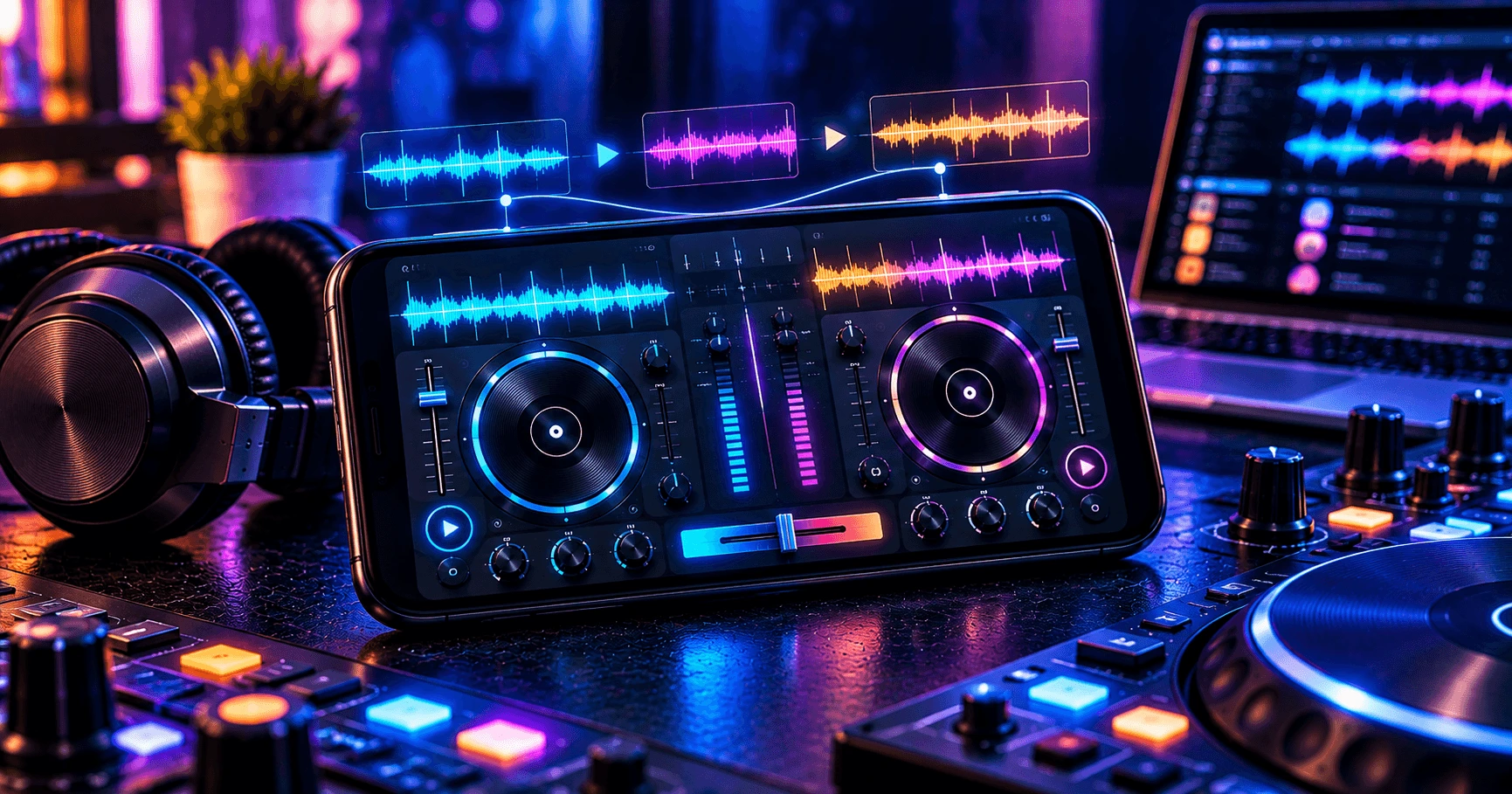
Building your first DJ mix can feel complicated when you are trying to understand song selection, BPM, beat matching, transitions, and energy flow at the same time. The good news is that you do not need advanced DJ skills to create your first enjoyable mix.
A simple approach is to start with a small group of songs, understand their tempo and structure, and practice moving from one track to another smoothly. Once you become comfortable with the basic process, you can experiment with effects, creative transitions, mashups, and more advanced mixing techniques.
Application
DJ Remix – Music – Mashup
Category
Tutorial
Reading Time
8–10 Minutes
Difficulty
Beginner
What Is a DJ Mix?
A DJ mix is a sequence of songs played together with transitions that connect one track to the next. Instead of simply playing songs one after another, a DJ controls timing, volume, tempo, and transitions to create a continuous listening experience.
A good mix does not have to contain complicated effects. For beginners, smooth song changes and a comfortable energy flow are often more important than using many effects.
Your first goal should be to create a short mix that sounds consistent from beginning to end. Once you understand the basics, you can gradually make longer and more creative mixes.
Choose Songs for Your First DJ Mix
Song selection is one of the most important parts of building a DJ mix. Start with a small collection instead of trying to mix dozens of songs at once.
Choose songs that work well together in terms of style, tempo, and overall energy. Familiar songs can also make practice easier because you already understand their rhythm and structure.
For your first mix, try choosing:
- 5–8 songs with a compatible style
- Songs with similar or gradually changing BPM
- Tracks with clear drum patterns
- Songs you already know well
- Tracks with sections that make transitions easier
Understand BPM Before You Start Mixing
BPM means beats per minute and indicates the tempo of a song. Understanding BPM is useful because tracks with very different tempos can be harder to combine smoothly.
Before starting your mix, check the BPM of the songs you selected. You do not necessarily need every track to have exactly the same BPM, but keeping the tempo reasonably compatible can make your first transitions easier.
For example, if one song is around 100 BPM and another is around 102 BPM, adjusting their tempos slightly may make the transition easier than moving immediately between tracks with very different tempos.
Start With Simple Beat Matching
Beat matching means aligning the beats of two tracks so that they play together in time. It is one of the fundamental skills of DJ mixing.
Load your first song and allow it to play normally. Then prepare the next track and listen carefully to its beat. Adjust the tempo and timing so that the beats line up before bringing the second track into the mix.
Do not worry about making your first attempt perfect. Repeating this process will help you develop a better sense of timing and rhythm.
Practice Your First Transition
Once the beats are reasonably aligned, practice moving from the first song to the second. The easiest starting point is a simple volume transition.
Gradually lower the volume of the first track while bringing the second track up. Listen for differences in rhythm, volume, and energy. If the transition sounds uncomfortable, return to the starting point and try again.
Simple transitions are often the best way to learn because they allow you to focus on timing instead of complicated effects.
Learn the Basic Structure of a Song
Understanding song structure can make DJ transitions much easier. Many songs contain recognizable sections such as intros, verses, choruses, breakdowns, and outros. These sections give you natural opportunities to bring another track into the mix.
Pay attention to sections where the drums are clear and the arrangement is less crowded. These moments can provide a smoother space for introducing the next song.
When practicing, listen to each track before mixing and identify where the intro, main sections, breakdowns, and outro occur. Knowing these points helps you plan your transitions instead of making them randomly.
Use Intros and Outros to Make Mixing Easier
Song intros and outros are often useful for beginner DJ mixes because they may contain fewer musical elements. This can make it easier to combine one track with another without creating too much sound at the same time.
Try starting the next song during a suitable section of the current track. Keep the transition simple and listen to how the two tracks interact.
A simple transition idea:
- Let the first song reach a suitable transition point.
- Prepare the second song and match its tempo.
- Align the beats.
- Start the second song at an appropriate point.
- Gradually reduce the first song while increasing the second.
Control the Energy of Your DJ Mix
A good DJ mix is not only about matching BPM. The energy of each song also affects how the mix feels. Moving randomly between high-energy and low-energy tracks can make the set feel disconnected.
Think about your mix as a journey. You can begin with a comfortable track, gradually increase the energy, reach a stronger section, and then change direction when it makes musical sense.
For a first DJ mix, avoid making every song extremely energetic. Small changes in intensity can help the mix feel more natural.
Keep Your First Transitions Simple
Beginners sometimes try to use filters, delays, loops, effects, and rapid volume changes during every transition. This can make a mix harder to control.
Start with basic volume transitions and beat matching. Once you can consistently make two songs connect smoothly, introduce one additional technique at a time.
The goal of your first mix should be control and consistency rather than showing every feature available in your DJ software or app.
Practice Mixing Two Songs Before Adding More
You do not need to build a complete DJ set immediately. Pick two compatible songs and practice transitioning between them several times.
Try starting the second song at different points and experiment with the transition timing. Listen to each attempt and identify what sounded smooth and what needs improvement.
After you can comfortably mix two songs, add a third track. Continue expanding the mix gradually instead of trying to control the entire playlist at once.
Record Your Practice Mixes
Recording your practice sessions is one of the easiest ways to identify problems that you may not notice while mixing. When you listen afterward, pay attention to beat alignment, volume changes, awkward transitions, and sudden changes in energy.
Do not judge the entire mix only by one mistake. Focus on identifying one or two improvements for your next attempt. Repeating this process can help you develop better timing and confidence.
Build a Short Mix Before Creating a Long Set
Your first DJ mix does not need to be an hour long. A short mix can give you enough time to practice song selection, beat matching, transitions, and energy control without becoming overwhelming.
Start with a few carefully selected songs and concentrate on making every transition sound intentional. Once you are comfortable with a short mix, you can gradually create longer sets.
Use DJ Remix – Music – Mashup for Practice
DJ Remix – Music – Mashup can be part of your practice workflow when you want to experiment with songs, rhythm, and different mixing ideas on Android. Start with simple combinations and focus on learning how one track connects to another.
As your confidence improves, you can explore more creative mixing approaches and build more structured DJ sets. For another practical guide, see how to mix Bollywood songs like a DJ.
Create a Simple Song Order
Once you are comfortable mixing individual songs, organize them into a basic sequence. The order of your tracks can have a big effect on how naturally your DJ mix develops.
Start with a song that is easy to mix and use it as the foundation of your set. Then choose tracks that have compatible BPM, style, and energy. Avoid making large changes between every song unless the change is intentional.
A simple beginner song order can be:
- Opening track with comfortable energy
- Second track with similar tempo and style
- Track that gradually increases the energy
- Higher-energy track for the main section
- Closing track or a natural transition into another section
Pay Attention to Volume Levels
Even a well-timed transition can sound uncomfortable when the volume levels between two songs are very different. Listen carefully to the overall loudness before bringing a new track fully into the mix.
Use the available volume controls to make the transition balanced. Avoid pushing every track to the maximum level because this can make the mix sound harsh or inconsistent.
During practice, concentrate on making both songs feel comfortable together rather than focusing only on the beat.
Avoid Mixing Too Many Elements at Once
When two full songs are playing together, vocals, basslines, melodies, and drums can overlap. This can make the transition sound crowded even when the beats are perfectly aligned.
If a transition sounds messy, try changing the timing or reducing the volume of one track. You can also choose a different section of the song where fewer musical elements are competing.
Learning to listen for these overlaps is an important part of developing your DJ mixing skills.
Practice One Mixing Technique at a Time
There are many DJ techniques you can learn, including beat matching, EQ transitions, filters, loops, effects, cuts, and blends. Trying to learn all of them at once can make the process unnecessarily difficult.
For your first DJ mix, concentrate on beat matching and smooth volume transitions. After you become comfortable with these fundamentals, add techniques such as EQ adjustments or simple effects.
Building your skills gradually makes it easier to understand which technique works best for a particular transition.
Review and Improve Your First DJ Mix
After completing your first mix, listen to it from beginning to end without making changes. Write down the moments that sound smooth and the transitions that need more work.
You may notice that some songs fit together better than expected while other combinations create problems. Use this information when preparing your next mix.
Each practice session should have a small goal, such as improving beat matching, making cleaner volume changes, or creating a smoother energy progression.
Frequently Asked Questions
Conclusion
Building your first DJ mix from scratch is mainly about learning the fundamentals one step at a time. Choose compatible songs, understand BPM, practice beat matching, and focus on smooth transitions before adding advanced effects.
Keep your first mix short, record your practice sessions, and use each attempt to improve a specific skill. With regular practice, you can gradually create longer and more creative mixes with better song flow and transitions.